

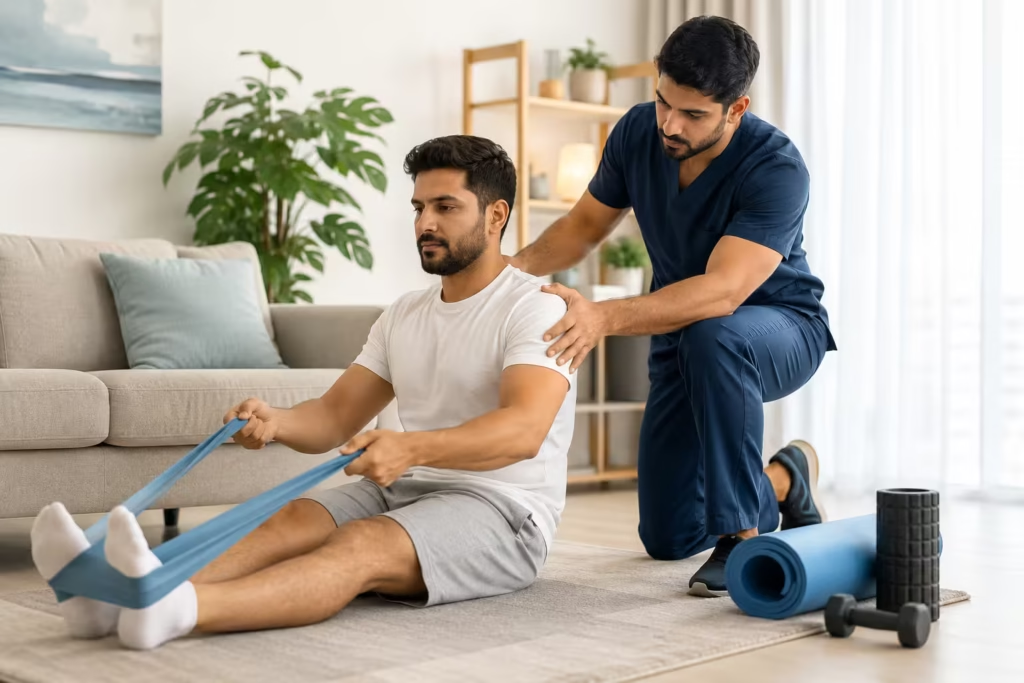
A good home physiotherapy service in Dubai is built to answer one honest question the same question everyone asks first. When you are dealing with a nagging injury, recovering from a major surgical procedure, or helping an aging family member regain their footing, you only want to know: How many sessions is this going to take, and when will life get back to normal?
It is completely natural to look for a quick, definitive number. However, the human body does not run on a rigid checklist. One of the biggest challenges our team faces during our first visits to homes across Dubai is managing unrealistic expectations. It is incredibly common for someone who has ignored a dull, chronic lower back ache for a decade to expect it to vanish after three hours of therapy. On the flip side, someone else might assume a minor muscle tear means they are locked into months of grueling, expensive treatment.
At Yad Al Amal Home Healthcare Center, we don’t believe in giving a generic estimate just to secure a booking. Healing is an individual process. Your recovery timeline depends heavily on your unique body mechanics, how your tissues are healing, and the real-life dynamics of your household. Booking a specialized home physiotherapy service in Dubai is about cutting out the clinical guesswork and building a timeline around your real-world recovery.
The Reality of Healing Timelines (By the Numbers)
While everyone heals at their own biological pace, it helps to look at typical timelines across different conditions. Real recovery isn’t about a sudden cure; it is a gradual transition from relieving sharp pain to rebuilding muscle stability and regaining your everyday independence.
For simple muscle strains, you will often feel a major difference after just a few visits. But if you have just come home with a brand-new titanium joint, your body needs structured time to safely adapt and rebuild muscle mass. When you rely on a high-quality physiotherapy home service, the focus is on guiding your tissues safely through each stage of repair without pushing past safe biological limits.
Real Life Happens: The Unfiltered Factors That Change Your Timeline
If recovery happened in a perfect laboratory, every timeline would match the textbook. But real life in Dubai is full of variables that can speed up or slow down your progress. Here are the real factors our therapists navigate every single day:
Consistency vs. Budget Adjustments
A major hurdle to a steady recovery occurs when a family attempts to stretch out the clinically recommended schedule. If a post-surgical protocol requires three visits a week to keep a joint from freezing up, reducing that to one visit a week due to a busy calendar or budget preferences can slow down your progress. When a joint loses ground between visits, it takes more total sessions over the long run to reach the same physical milestones.
Complicated Mental and Cognitive Realities
Rehabilitation isn’t always just about the muscles. For complex cases—such as elderly patients navigating advanced dementia or individuals experiencing post-stroke psychosis—the physical path is deeply connected to behavioral health. When a patient feels anxious, confused, or resistant toward therapy, our specialists adjust their approach. We prioritize safety, clear communication, and emotional comfort, which means it may take a larger block of sessions to reach your mobility goals safely.
The Demands of an Executive Lifestyle
Dubai’s fast-paced business culture introduces its own disruptions. A sudden international flight or hours spent in a tight airplane seat right in the middle of a spinal disc recovery plan can aggravate healing tissues, occasionally requiring a few extra sessions to correct the setback.
Real Questions from Dubai Families
We believe in complete transparency. Here are honest answers to the practical questions our team handles every single day.
Q: Can I buy a block of 10 sessions and split them between different family members?
A: Yes, absolutely. We see many households where multiple generations need different types of physical support. At Yad Al Amal, you can purchase a premium package of 10 sessions and share it across your home. For example, a father managing a stiff back from long office hours and a daughter recovering from a weekend sports injury can share the same pool of sessions. Each person receives their own dedicated clinical assessment and customized care path under the same shared plan.
Q: How many sessions per week are recommended for an elderly patient with severe balance issues?
A: There is no single, cookie-cutter answer to balance care. The ideal frequency depends entirely on the individual’s current physical state, the progression of their specific condition, and their past medical history. An elderly family member with minor muscle weakness might only need two sessions a week to build confidence, while someone managing balance changes from a progressive condition like Parkinson’s disease often requires three to four highly focused weekly visits to ensure safety at home.
Also Read : Struggling with pain, stiffness or mobility issues? here’s why your recovery starts at home, not a clinic
Why the Initial Assessment Changes Everything
True medical progress begins with managing expectations from day one. We call our first visit “Session Zero.” It is a dedicated, comprehensive home evaluation where our DHA-licensed therapists take the time to talk through your goals with complete honesty:
- Looking at the Whole Picture: We look beyond the immediate area of pain, reviewing your complete health history, lifestyle habits, and surgical records.
- Objective Movement Testing: Using portable tools like digital goniometers and muscle activation sensors, we measure exactly how your joints and muscles are performing.
- Setting Honest Milestones: We map out an honest plan, showing you exactly what your body can safely achieve in week two, at the one-month mark, and by the end of your session block.

The Step-by-Step Path of a Home Recovery Journey
To give your recovery clear direction, our home visits follow a structured, multi-week framework. Every session is designed to build directly on top of the progress made during the last visit.
1.Understanding the patients physiology and Movement :
Weeks 1 – 2 : The primary goal is simple: manage acute pain and protect healing tissues. Your therapist uses gentle manual techniques or portable cold lasers to decrease inflammation and establish a comfortable movement baseline.
2. Activating Weak Muscles and Strengthening :
Weeks 3 – 5 : Once sharp pain settles down, the protocol focuses on active movement. The specialist isolates underused stabilizer muscles, corrects movement imbalances, and safely builds core structural support.
3.Real-World Balance and Safe Navigation :
Weeks 6 – 8 : We integrate your exercises directly with your home environment. We practice safe stair climbing, correct your walking form on your own floors, and build balance to ensure you feel secure moving around independently.
4.Periodic Evaluation and lomgterm Maintenance Planning :
Weeks 9+: The specialist physiotherapists compares your movement metrics against your initial “Session Zero” baselines. We adjust your long-term routine, transition you to an independent program, or provide a safe sign-off for daily life.
A Direct, Transparent Path forward
True recovery requires consistency, trust, and a plan that fits your life. Opting for a dedicated physiotherapy at home in dubai program means you can skip the exhaustion of a painful commute, protect a vulnerable health status, and get the undivided attention of an expert clinician for every single minute of your care.
At Yad Al Amal Home Healthcare Center, we combine professional medical standards with clear, honest guidance. We work closely with your family to navigate real-world challenges and build a safe, reliable path to your long-term physical health.
Get in touch with our clinical coordination team today to book your comprehensive in-home evaluation. Let’s cut out the guesswork and build an honest plan to get your strength and mobility back.
Also Read : What Equipment Do Physiotherapists Actually Bring to Your Door in Dubai — And Is It Enough?